
Overview
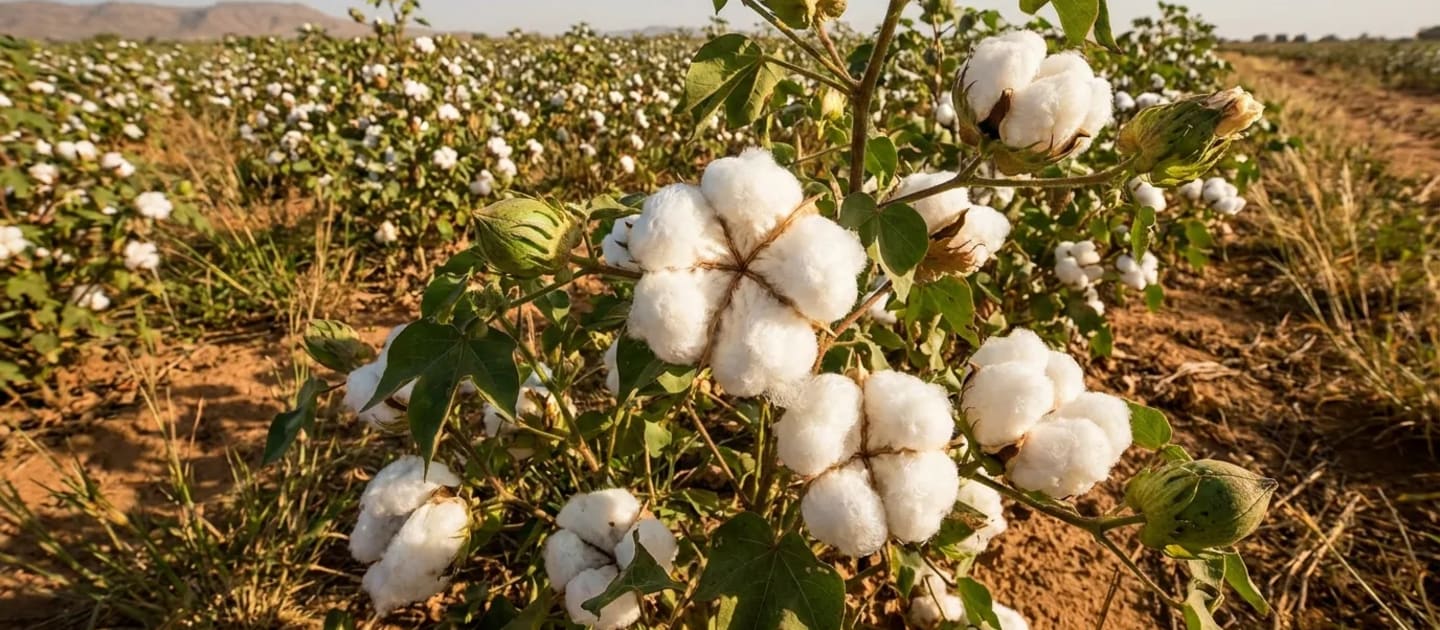
Cotton links the savannah farms of the north to the weaving traditions of its cities and, for much of the twentieth century, to the textile mills of Kaduna. Indigenous cotton was spun and woven long before export cultivation, and the cloth traditions it fed are covered in the pages on traditional arts.
Where it's found
History of exploitation
Hand-spun cotton supplied the weaving and dyeing centres of Kano, Zaria and Sokoto for centuries. Colonial administrations promoted cotton for export from the early twentieth century, with ginneries built along the railway. Textile mills were established in Kaduna and Kano from the 1950s and expanded through the 1960s and 1970s, making textiles one of the country's largest manufacturing employers. Both the mills and the cotton crop that fed them declined sharply from the 1980s and 1990s.
Economic role
Cotton was historically a significant northern export and later the raw material of a large domestic textile industry. That industry's contraction removed many thousands of manufacturing jobs from Kaduna and Kano. No current production figures are given here.
Environmental and social impact
Cotton is demanding of water and pesticides, and its cultivation in the savannah has been associated with pesticide exposure among farmers and pressure on marginal soils. The decline of the mills left industrial sites and unemployment in the northern textile cities, and imported and second-hand clothing displaced much domestic production.