
Overview
Ikot Ekpene in Akwa Ibom State is the best-known centre of raffia and cane work in Nigeria, producing baskets, mats, furniture, bags and hats. The craft is closely associated with the Ibibio and Annang communities of the area.
Origin and history
The town's reputation for raffia work is long established and grew further through the twentieth century, when it became a supply centre for markets across the country and gave Ikot Ekpene its standing as a craft town. Cane and raffia furniture entered wider domestic use from the mid-twentieth century, and the trade has continued through cooperatives, family workshops and a craft market in the town, alongside carving and mask-making traditions in the same area.
Materials and techniques
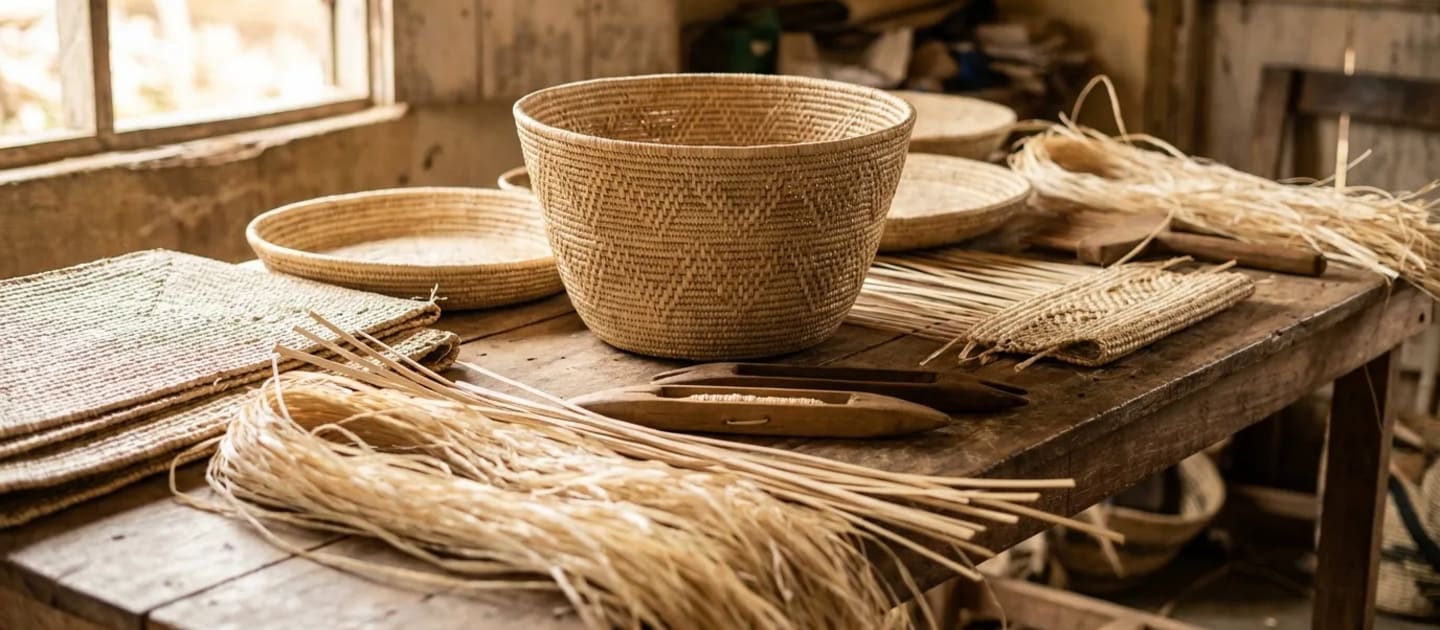
Raffia palm supplies the fibre, stripped from the frond and dried, and rattan cane supplies the frame. Weavers coil, twine and plait the fibre over or around a cane structure, binding joints with split cane, and dye some strands so patterns build up as the piece is worked. Furniture is made by steaming and bending cane to shape before weaving the seat and back. Work is done by hand throughout, and a large piece may occupy a weaver for days.
Cultural significance
The craft supports households and workshops in and around Ikot Ekpene and has given the town a national identity as a craft centre. Woven mats, fans and containers also have ceremonial and household roles in Ibibio and Annang life, and the masks and raffia costume used in masquerade in the same region draw on the same materials and skills.
Notable examples
Cane furniture
Chairs, tables and settees built on bent cane frames with woven raffia surfaces.
Raffia baskets and mats
Coiled and plaited household containers, mats and fans.
Ikot Ekpene raffia market
The town's long-standing craft market, a supply point for buyers from across the country.